Crushing makes rock smaller. Screening decides what size product it actually becomes.
That sounds like a small distinction, but it is one of the most important parts of aggregate production. A quarry or sand-and-gravel plant does not sell "small rock" in a loose sense. It sells products that are expected to fit a size range: clean 1-inch stone, road base, concrete aggregate, asphalt aggregate, bedding stone, drain rock, manufactured sand, pea gravel, and many others. Those products are defined by gradation, which means the distribution of particle sizes in the material.
Screening is the process that separates those sizes.
If screening is accurate, the finished pile stays close to the target gradation. If screening is poor, the pile can pick up too much oversize, too many fines, or too much near-size material that should have gone somewhere else. That can change drainage, compaction, surface texture, concrete performance, asphalt mix behavior, and whether a delivered load meets a project specification.
This guide explains how aggregate screening works, why screen setup matters, and what customers should understand when choosing between clean stone, base rock, sand, and other screened products.
Screening Is The Size-Control Step
Most aggregate plants are built around a repeated pattern:
- Feed material enters the plant.
- Crushers reduce oversize material.
- Screens separate the crushed material by size.
- Finished sizes go to stockpiles.
- Oversize or off-size material returns to a crusher or another screen.
That loop is why screening and crushing are usually discussed together. Crushing changes the rock. Screening sorts the result.
A screen deck is a surface with openings. Material travels across that surface while the machine vibrates. Particles smaller than the openings have a chance to pass through. Particles larger than the openings remain on top and travel off the end of the deck. In screening language, the material that passes through is undersize. The material that stays on top is oversize.
In a real plant, one screen can have multiple decks stacked vertically. The top deck makes the coarsest cut. The second deck makes a finer cut. A third deck may remove fines or split another product. The plant can then direct each stream to a product pile, a wash plant, a crusher, or a recirculating conveyor.
That is how one feed stream can become several finished products.
Why Screening Accuracy Matters To Customers
The customer usually sees only the finished pile or the delivered truckload. But the screen is one of the main reasons that pile behaves the way it does.
A clean drainage stone needs enough open void space for water to move. If the screen lets too many fines into that product, those fines can fill the voids and reduce flow.
A compacting base needs a broad range of particle sizes, including fines, so smaller particles fill the gaps between larger particles. If the screen removes too much fine material, the base may stay loose and difficult to tighten under compaction. If it contains too much fine material, it can hold water, pump, or become muddy under traffic.
A concrete aggregate needs controlled gradation because gradation affects paste demand, workability, finishability, and the economy of the mix. Asphalt aggregates are also sensitive to gradation because the aggregate skeleton carries load and controls void structure.
The point is simple: screening is not just housekeeping. It is product quality control.
Gradation: The Data Behind The Pile
Aggregate gradation is usually measured with a sieve analysis. A dried sample is placed on a nested stack of sieves, with larger openings on top and smaller openings below. After shaking, the lab weighs how much material remains on each sieve. The result is reported as percent passing, percent retained, or cumulative percent retained.
Those numbers form a gradation curve. A steep curve means the product is concentrated around a narrow size range. A flatter curve means the product has a broader distribution from coarse to fine.
Screening is the plant version of that same concept. A production screen uses physical openings to split the material continuously. The lab sieve verifies whether the plant is producing what the specification or product target calls for.
That connection matters when comparing product names. A name like "#57 stone," "AB-3," "crusher run," or "masonry sand" is only useful if it is tied to a gradation. Names vary by region and supplier. The sieve results are the more reliable language.
The Two Things That Must Happen On A Screen
Good screening depends on two separate actions: stratification and separation.
Stratification happens when vibration loosens the bed of material so smaller particles move downward through the larger particles. Imagine shaking a mixed jar of stones and sand. The finer particles tend to work their way down through the spaces. A screen needs that same effect, because undersize particles cannot pass through an opening until they reach the screen surface.
Separation happens after the undersize particles reach the surface and fall through the openings.
Many screening problems come from confusing those two steps. A screen may have the right opening size but still fail if the material bed is too deep for fines to reach the deck. Or the deck may be open and clean but the particle shape, moisture, or feed rate may reduce the chance that near-size particles find the openings before they travel off the end.
Screening is probabilistic. A particle smaller than the opening is not mechanically forced through. It needs enough contact with the deck, enough attempts, and enough time.
Bed Depth And Deck Loading
Bed depth is the thickness of material on the screen deck. If the bed is too deep, the lower layer may screen well but the upper layer may ride across without ever reaching the openings. That creates carryover, which means undersize particles stay with the oversize stream.
Carryover can contaminate clean coarse products. For example, if fines that should have passed through remain in a nominal 1-inch product, that product may no longer be as clean or free-draining as expected.
Screening references often use practical limits for bed depth at the discharge end of a screen. The exact number depends on the product, opening, machine, and application, but the principle is consistent: the material layer must be thin enough for stratification to finish before the material leaves the deck.
Overloading a screen is tempting because more tons per hour looks better at first. But if overload reduces screening efficiency, the plant may create off-spec material, build excess recirculating load, or force extra re-screening. The true goal is not maximum feed rate for a few minutes. It is consistent tons of sellable product.
Feed Presentation: The First Few Feet Matter
A screen cannot fix poor feed presentation forever.
Material should enter the screen evenly across the full width of the deck. If the feed lands mostly on one side, that side wears faster, blinds faster, and runs deeper. The other side of the deck may have unused open area. The result is lower capacity and more inconsistent separation.
The first few feet of the deck are especially important because that is where the bed begins to spread and stratify. A good feedbox, distributor, chute design, and drop height can make the difference between a screen that uses its full width and a screen that does most of the work on one narrow lane.
For customers, this matters because a quarry may have the same screen opening but produce different quality depending on how well the plant feeds the screen. Good aggregate is partly about equipment selection and partly about operating discipline.
Inclined Screens
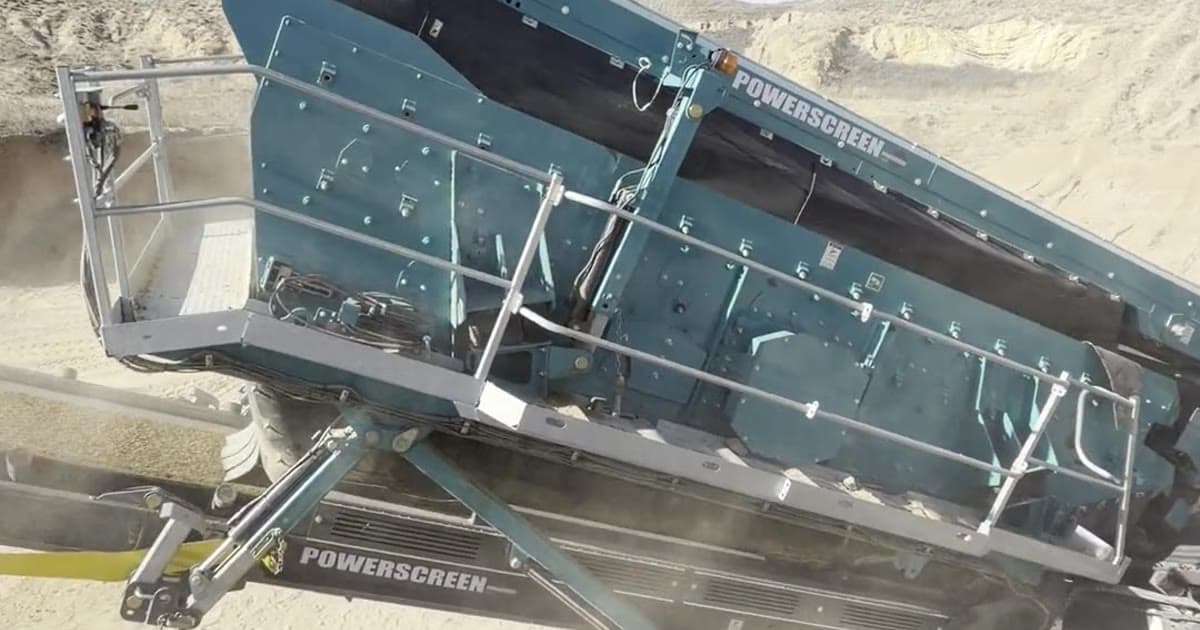
Inclined screens are common in aggregate plants. They are installed at a slope so gravity helps move material down the deck. The machine vibration helps stratify the bed and move particles across the screen surface.
The advantage of an inclined screen is efficient conveying. Because gravity helps, the screen may need less aggressive motion than a horizontal screen to move material. Inclined screens are often used for high-volume sizing in stationary plants and portable plants.
The tradeoff is that material may move quickly. If near-size material needs extra time to pass, the screen length, deck angle, media type, feed rate, and stroke all matter. A steep deck can increase travel speed, but it may reduce the chance that difficult particles pass through.
Inclined screens are a workhorse. They are not automatically better or worse than horizontal screens. They are selected and adjusted around the job.
Horizontal Screens
Horizontal screens do not rely on slope in the same way. They use a more directed vibration to move material forward. Because they are flatter, they can fit in lower-profile portable plants or places with height constraints.
Horizontal screens can offer accurate separation because material may spend more time on the deck. They can also handle applications where a controlled cut is important. But they depend heavily on the right motion, speed, stroke, and feed rate because gravity is not doing as much of the conveying work.
For fine sizing, portable circuits, and some closed-circuit crushing systems, horizontal screens can be a good fit. Like inclined screens, they must be matched to the material.
Multi-Slope And Banana Screens
Multi-slope screens, often called banana screens, use different deck angles along the length of the screen. The feed end is steeper, which helps quickly thin and spread the incoming bed. The discharge end is flatter, giving near-size particles more opportunity to pass.
This design can increase capacity when the feed contains a lot of material that is already much smaller than the top opening. The steep section rapidly removes easy undersize. The slower section gives harder-to-screen material more time.
That concept is important because not all particles are equally difficult to separate. Material much smaller than the opening passes easily. Material only slightly smaller than the opening needs more attempts. Material shaped like a flat chip may behave differently depending on how it lands. Screen design is about managing those differences.
Dewatering And Rinse Screens
Some screens are used mainly for sizing. Others are used for washing, rinsing, or dewatering.
A rinse screen sprays water over material to remove dust, clay, or fine particles from the surface. This can be used to make cleaner stone or prepare material for a wash circuit.
A dewatering screen is designed to remove water from sand, fine aggregate, or slurry. It usually uses a different motion and media setup than a dry sizing screen. The goal is not only to separate solids by size but to discharge a product with lower moisture so it can be stockpiled, loaded, and sold more efficiently.
Wet screening can solve problems that dry screening cannot, especially when clay, dust, or high moisture causes blinding. But wet processing also adds pumps, water supply, settling, clarification, maintenance, and seasonal issues.
Screen Motion: Circular, Linear, And Elliptical
Vibrating screens use different motion patterns.
Circular motion is common on inclined screens. It is effective for moving material down a sloped deck and can be useful in many aggregate sizing applications.
Linear motion is common on horizontal screens and dewatering screens. It conveys material in a more directed path and can be tuned for specific applications.
Elliptical motion combines parts of both. It can help with accuracy, stratification, and difficult material where plugging or blinding is a concern.
The important point is that screen motion is not just a vibration. It is a controlled movement pattern. Speed and stroke determine how aggressively the deck throws and loosens the material. If the motion is too weak, particles may not stratify. If it is too aggressive, material may skip over openings or create unnecessary machine stress.
Speed And Stroke
Screen speed is how fast the machine vibrates. Stroke, sometimes called throw, is the distance the screen moves during each vibration cycle.
Increasing speed or stroke can improve carrying capacity and stratification in some conditions. It can also reduce plugging and help material move. But more is not always better. Too much speed can increase mechanical stress. Too much stroke can cause material to bounce over openings rather than present itself to them.
This is why screen setup is usually checked with a combination of machine inspection, vibration measurements, gradation testing, and product observation. A screen that looks busy is not necessarily screening efficiently.
For a customer, the takeaway is that product quality does not come from a single screen cloth size. It comes from the full system: deck opening, motion, feed rate, moisture, material shape, media condition, and how the plant responds to test results.
Screen Media: The Surface That Does The Work
Screen media is the replaceable surface that contains the openings. It may be woven wire, rubber, polyurethane, perforated plate, harp wire, piano wire, or another engineered design.
Media selection affects capacity, wear life, plugging, blinding, noise, and product accuracy.
Woven wire cloth is common because it provides high open area. More open area means more opportunities for undersize particles to pass. The tradeoff is wear life. Heavier wire lasts longer but reduces open area. Lighter wire screens faster but may wear out sooner.
Polyurethane and rubber media generally last longer in abrasive or wet applications and can reduce noise. They can also resist pegging and blinding in some conditions. The tradeoff is often lower open area compared with wire.
Self-cleaning media, such as harp, wave, or piano wire designs, can help where near-size particles wedge in the openings or wet fines blind the surface. These media types allow parts of the screen surface to vibrate independently, shaking loose difficult particles. They may not be the longest-wearing option, but they can be valuable when downtime and off-spec product cost more than media replacement.
The best media is not the toughest media in every case. It is the media that produces the required gradation at the best total cost.
Open Area, Wear Life, And The Real Tradeoff
Open area is the percentage of a screen deck that is actual opening rather than wire, rubber, polyurethane, or support structure. Higher open area usually improves capacity because more openings are available.
But open area has a cost. Thin wire and large open area may wear faster. Thick media may last longer but reduce capacity. Rubber or polyurethane may solve wear and noise problems but require a larger screen or different setup to maintain throughput.
This tradeoff is why two screens with the same nominal opening can perform differently. A half-inch square opening in one media type does not behave exactly like a half-inch opening in another media type if open area, thickness, flexibility, and wear pattern differ.
As media wears, openings can change shape or size. That can create contamination. A worn deck may let oversize into a product that should be tighter. A pegged deck may hold back undersize and send it to the wrong pile. Both issues show up in gradation tests.
Plugging, Pegging, And Blinding
Plugging or pegging happens when particles wedge in the screen openings. This is common with near-size material, especially if particles are angular, flat, or elongated. Once openings are blocked, open area drops and screening efficiency falls.
Blinding happens when fine material sticks to or coats the screen surface. Moisture and clay are common causes. A blinded screen may look like it still has the right opening size, but the openings are covered by sticky fines.
Both problems reduce capacity and product quality. The plant may respond by changing media, changing stroke or speed, adding water, improving feed presentation, modifying crusher settings upstream, or reducing feed rate.
The customer-facing symptom is often the same: the product looks dirty, inconsistent, or different from previous loads. The cause may not be the rock itself. It may be a screening efficiency problem.
Carryover And Contamination
Carryover means undersize particles fail to pass and travel with the oversize stream. Contamination means particles report to the wrong product pile.
For example, if a clean coarse stone contains excess fines, it may not drain as intended. If a base product loses too many fines, it may not compact tightly. If sand contains too much oversize, it may become difficult to finish or place. If a concrete aggregate receives too much flat or off-size material, it can affect mix behavior.
The plant manages these issues with sampling and gradation testing. A single visual check is not enough. Aggregate can look acceptable while drifting toward the edge of a specification band. Data matters.
Closed-Circuit Screening And Recirculation
Many crushing plants use closed circuits. In a closed circuit, material is crushed, screened, and then split. Finished-size material exits the circuit. Oversize returns to the crusher for another pass.
This helps control top size and final gradation. It also keeps the crusher focused on material that still needs reduction instead of wasting energy on material that is already small enough.
But closed circuits depend on good screening. If the screen is inefficient, too much finished-size material may return to the crusher. That creates unnecessary fines, lowers capacity, increases wear, and changes the balance of the plant. If too much oversize escapes as product, the final pile may fail specification.
Screening is therefore both a quality function and a cost function.
Screening For Clean Stone
Clean stone is usually a narrow, coarse product with limited fines. It may be washed, dry screened, or both, depending on the deposit and product requirement.
Clean stone is often used where void space matters: drainage zones, decorative beds, certain pipe bedding applications, and concrete or asphalt aggregate when specified. The exact product depends on the job. A clean 1-inch stone is not the same as a clean 3/8-inch chip, and neither is the same as a manufactured sand.
When screening clean stone, the plant is trying to remove undersize and fines while controlling oversize. If the bottom deck blinds, fines can ride into the clean product. If the top cut is poor, oversize can contaminate the pile. If stockpiling is careless, segregation can undo good screening by letting coarse particles roll down the outside of the pile while finer material stays near the center.
That is why clean stone should be understood as a process result, not just a name.
Screening For Base Rock And Crusher Run
Base rock is different. Many base products are intentionally well graded, meaning they include a range of sizes from coarse particles down through fines. The fines help fill voids and create a dense, compacted mass.
For a base product, screening is not simply about removing everything small. It is about controlling the proportion of sizes. Too little fine material can make the base loose and hard to lock together. Too much fine material can increase water sensitivity and pumping risk. Too much oversize can make grading and compaction difficult.
Products such as road base, AB-3, crusher run, and dense graded aggregate vary by region and specification. The common idea is a controlled blend of sizes that compacts. The screen circuit may combine crushed material, screenings, or separate fractions to hit the target band.
Screening Sand And Manufactured Sand
Sand is not just "small aggregate." It has its own gradation and performance issues.
Natural sand may be screened and washed to remove oversize, clay, or excess silt. Manufactured sand is produced by crushing rock and then controlling the fine aggregate portion. It may need air classification, washing, or blending to manage the amount of very fine material.
The No. 200 sieve is important in many sand and aggregate specifications because it marks very fine material. Material passing the No. 200 sieve can include dust, silt, and clay-sized particles. Some of that material may be acceptable or even useful in certain products, but too much can affect water demand, bonding, plasticity, drainage, and compaction behavior.
Screening alone cannot always separate the finest particles efficiently. That is where washing, classifying tanks, hydrocyclones, and dewatering screens may enter the process.
Stockpiling Can Protect Or Damage The Screened Product
Screening does not end the quality-control problem. After material leaves the screen, it must be conveyed, dropped, stacked, reclaimed, loaded, and delivered.
Segregation is one of the biggest risks. Coarse particles tend to roll farther down a pile. Fine particles tend to stay closer to the drop point. If a loader digs from only one part of a segregated pile, one truck may receive a coarser load and another truck may receive a finer load.
Good stockpile practices include controlled drop heights, telescoping conveyors where appropriate, stacking in layers or windrows, avoiding cone piles when gradation uniformity is critical, and reclaiming in a way that blends rather than separates the pile.
Customers often blame a product name when they see inconsistency. Sometimes the issue is not the screen opening. It is post-screen handling.
What A Good Producer Watches
Good aggregate producers do not rely on screens blindly. They watch the process.
Common checks include gradation testing, visual inspection of stockpiles, screen media wear checks, vibration checks, feed-rate control, crusher setting review, belt scale trends, moisture observations, and customer feedback.
If a product begins drifting, the plant can adjust. That might mean changing a crusher closed-side setting, replacing worn media, changing screen speed, changing the blend of fractions, washing material, or separating a questionable pile until test results are known.
This is why source reliability matters. A supplier with strong process control is not simply selling rock. It is selling repeatability.
How To Order Screened Aggregate More Precisely
The safest way to order aggregate is to describe the job and the required behavior.
For drainage, say that drainage is the priority and ask for a clean or washed product appropriate for the application. For a compacted base, say that compaction and load support are the priority. For concrete, asphalt, pipe bedding, or DOT work, send the specification or gradation requirement.
Useful details include:
- Application: driveway base, drainage, concrete, asphalt, bedding, decorative, pad, road shoulder, or job-site access.
- Needed behavior: free-draining, compacting, decorative, stable under traffic, or spec-controlled.
- Target size or spec: product name, sieve band, DOT requirement, engineer detail, or plan sheet.
- Site conditions: clay soil, water problem, heavy trucks, steep slope, freeze-thaw exposure, or limited access.
- Quantity and delivery timing.
Product names are helpful, but they should not be the only information. "Clean rock," "base," "screenings," and "crusher run" can mean different things in different markets.
Practical Examples
If a driveway is rutting because the base is thin and soft, clean stone on top may not solve the real problem. The job may need a thicker compacted base, subgrade correction, drainage improvement, or geotextile separation before the surface layer is placed.
If a French drain or drainage trench is filling with muddy fines, a dense base product is probably the wrong material. A clean, open-graded stone is usually the better starting point, paired with proper pipe, fabric, slope, and outlet design.
If a decorative river rock bed looks dirty or dusty, the issue may be fines, handling, or lack of washing. A screened and washed product will usually look cleaner, but even washed stone can pick up dust during hauling and placement.
If a concrete or asphalt job has a written aggregate spec, do not substitute by name alone. Match the required gradation, quality requirements, and source approvals.
The Bottom Line
Screening is where aggregate production becomes precise. It turns a crushed or excavated feed into size-controlled products that can drain, compact, blend, or meet a specification.
The most important ideas are:
- Screening separates aggregate by size.
- Gradation is the data that describes the product.
- Stratification and separation both have to happen.
- Feed presentation, bed depth, media, moisture, and screen motion all affect efficiency.
- Plugging, blinding, carryover, and segregation can change product quality.
- Clean stone, base rock, sand, and manufactured sand require different screening goals.
When you order aggregate, you do not need to know every screen setting in the plant. But it helps to understand that a screened product is engineered around behavior. Tell us what the material needs to do, and we can help match the right product to the job.
Get Delivered Pricing
Need screened aggregate for a project?