
Sand sounds simple until the job depends on it.
A mason may want a workable sand that finishes smoothly in mortar. A ready-mix producer may need a fine aggregate that fits a concrete mix design. A contractor may need fill sand that places easily in a trench. A quarry may produce manufactured sand from crushed rock and then wash or classify it so it can be used in asphalt or concrete.
All of those materials may be called "sand," but they do not behave the same way.
The differences come from gradation, particle shape, cleanliness, fines, mineral source, moisture, and processing. This guide explains the common sand categories and how to order the right one.
What Sand Means In Aggregate Terms
In construction aggregate, sand is fine aggregate. A common way to think about fine aggregate is material that mostly passes the No. 4 sieve and is mostly retained above the No. 200 sieve. The exact specification depends on the use and agency.
That definition matters because sand is not just "small dirt." It is a measured particle-size range.
Material finer than the No. 200 sieve is very fine. It can include rock dust, silt, and clay-sized particles. Those fines can strongly affect how sand behaves. Some fine mineral dust may be acceptable in one product. Plastic clay fines can be harmful in another because they hold water, coat particles, and change workability or strength.
This is why a sand that looks acceptable at a glance may not be acceptable for concrete, mortar, bedding, or drainage.
The Two Big Questions: Gradation And Cleanliness
The first question is gradation: how coarse or fine is the sand, and how are the particle sizes distributed?
A finer sand may feel smoother and finish more easily, but it may increase water demand in a mix. A coarser sand may improve stability or structure, but it may be too harsh for some finish work. A well-graded sand has a range of sizes that can pack efficiently. A poorly graded sand may be concentrated around a narrow size.
The second question is cleanliness: how much silt, clay, organic material, coatings, or deleterious material is present?
Cleanliness is not only appearance. Clay coatings can affect bonding. Organic impurities can interfere with cementitious reactions. Excess silt and clay can make a sand water-sensitive. For some products, washing and classifying are required to remove or control these materials.
Fine Aggregate Is A System Component
Sand usually works inside a larger system. In mortar, it works with cementitious paste. In concrete, it works with coarse aggregate, cement paste, admixtures, and water. In asphalt, it works with binder and other aggregate fractions. In bedding, it supports a pipe, paver, or slab. In fill, it must place and drain or compact as intended.
That is why one sand can be excellent for one job and wrong for another. A very fine, smooth sand may make a workable mortar but increase water demand in concrete. A sharp manufactured sand may help stability but feel harsh in finish work. A silty fill sand may be economical for rough backfill but unsuitable for clean bedding or concrete.
The right sand is not simply the cleanest or the cheapest. It is the sand whose gradation, shape, source, and fine fraction match the system it is going into.
Masonry Sand
Masonry sand is typically used in mortar, masonry work, and other small-tool applications where workability and finish matter.
Compared with many concrete sands, masonry sand is often finer and more uniform. The goal is a sand that blends well with cementitious materials and produces a mortar that spreads, beds, and finishes properly.
Good masonry sand should be clean enough for the intended mortar work and graded for the application. If it is too coarse, the mortar can feel harsh or difficult to tool. If it is too fine or contains too much clay-like material, it may require more water, shrink more, or behave inconsistently.
The exact requirements depend on the mortar specification. For critical masonry work, do not rely on the label alone. Ask for the gradation or the applicable spec.
Why Masonry Sand Feels Different
Masonry sand is often judged by feel because masons work it by hand. It should spread, bed units, tool joints, and finish without feeling overly harsh or gritty. That field feel comes from particle size distribution, particle shape, cleanliness, and moisture.
If the sand is too coarse, the mortar may drag under the trowel. If it is too fine, the mortar may need more water and may shrink or crack more. If it contains clay or organic impurities, consistency and bond can suffer. If the moisture varies greatly from load to load, batching by volume can become inconsistent.
For everyday work, a local masonry sand with a proven track record may be acceptable. For commercial or specified masonry, the gradation and quality requirements should control.
Concrete Sand
Concrete sand is fine aggregate used in concrete mixes. It is usually coarser than masonry sand and is selected to help the concrete mix achieve the right balance of workability, strength, paste demand, finishability, and economy.
Concrete is an aggregate-heavy material. The sand fills the spaces between coarse aggregate particles and works with cement paste to create a placeable mix. If the sand is too fine, the mix may need more water or paste. If it is too coarse or poorly graded, the mix can become harsh and difficult to finish.
Concrete sand must also be clean. Clay coatings, organic material, excess fines, and deleterious particles can create performance problems. In many cases, concrete sand is washed, classified, and tested to meet a specification.
ASTM C33 concrete sand is a common way buyers and producers describe fine aggregate intended for concrete. The ASTM C33 label matters because it points to a gradation and quality framework, not just a local nickname. If there is a mix design, ready-mix requirement, DOT requirement, ASTM C33 requirement, or engineer specification, that document controls the sand selection.
Sand And Water Demand In Concrete
Concrete sand strongly affects water demand. Finer sands have more surface area. Angular sands may need more paste to coat particles and maintain workability. Poorly graded sands can leave voids that require extra paste to fill.
Extra water can reduce strength and durability if the mix is not adjusted. Extra cement paste can increase cost and shrinkage. That is why concrete producers care about fine aggregate gradation, fineness modulus, absorption, moisture, deleterious material, and how the sand works with the coarse aggregate.
A concrete sand is not just "coarse sand." It is part of a mix design. Substituting a different sand can change slump, pumpability, finishability, air behavior, strength, and yield.
Combined Gradation In Concrete
Concrete often performs better when the coarse aggregate and fine aggregate work together as one combined gradation. The sand fills voids between coarse particles. The coarse particles reduce paste demand. The combined particle structure helps the mix move, consolidate, and finish.
If the sand is too fine, the mix may become sticky. If the sand is too coarse or gap-graded, the mix may become harsh and difficult to finish. If manufactured sand is used, blending with natural sand may improve workability while still using a locally available crushed product.
This is why some specifications and mix-design methods evaluate the combined aggregate grading rather than treating sand and stone as isolated products.
Fill Sand
Fill sand is used where the job primarily needs volume, leveling, or backfill rather than a finish-grade concrete or masonry aggregate.
Common uses include:
- General fill.
- Utility trench backfill, when allowed by the project.
- Leveling.
- Pipe bedding or padding, when the specification permits.
- Site grading.
- Some landscaping or construction uses where appearance is secondary.
Fill sand can vary widely. It may be natural sand, screened sand, bank sand, reject sand, or another local material. Some fill sands contain more fines than concrete or masonry sand. That may be acceptable for rough fill but not for concrete, drainage, or bedding applications that require clean, controlled material.
The right question is not "Is it fill sand?" The right question is "What is it being used for, and what gradation and cleanliness are required?"
Manufactured Sand
Manufactured sand is produced by crushing rock into fine aggregate rather than mining natural sand from a river, pit, or deposit.
Manufactured sand is becoming more important in many markets because natural sand can be limited, expensive, environmentally constrained, or located far from demand. A quarry may already generate fine screenings during crushing. With the right washing, classifying, and processing, some of those fines can be turned into usable asphalt or concrete sand.
Manufactured sand is not automatically inferior. It can be a high-quality product when properly processed. It does, however, behave differently from many natural sands. It may be more angular. It may contain more crusher dust. It may need washing, hydrocyclones, classifying tanks, or blending with natural sand to meet a target gradation and fines requirement.
For concrete, manufactured sand often needs careful evaluation because particle shape, fines, and gradation affect water demand and workability.
Processing Manufactured Sand
Manufactured sand often starts as crusher output or screenings. Raw screenings may contain too much ultrafine dust, may be angular, and may not have the right distribution across the fine sieves.
Processing can improve it. Screens remove oversize. Wash plants remove or control very fine material. Hydrocyclones and classifying tanks can split the fine aggregate into fractions. Dewatering screens reduce moisture. Blending can combine manufactured sand with natural sand or another classified fraction to hit a target curve.
The goal is not to remove all fines. Some mineral fines may be acceptable or useful depending on the product. The goal is to control the amount and type of fines so the sand behaves correctly.
Manufactured sand can be a strong resource in markets where natural sand is scarce, distant, or constrained. But it should be treated as an engineered fine aggregate, not as waste dust that automatically fits every use.
Natural Sand Versus Manufactured Sand
Natural sand is produced by weathering, erosion, and deposition. It may come from river, glacial, alluvial, or pit deposits. Particles are often more rounded than crushed manufactured sand, though that depends on the deposit.
Manufactured sand is produced by mechanical crushing. Particles are usually more angular and may have rougher surfaces. Angular particles can improve interlock in some applications but may reduce workability in others.
Natural sand can contain clay, silt, organics, or variable gradation depending on the deposit. Manufactured sand can contain excess rock dust or microfines depending on the crushing and screening process.
Neither is automatically better. The right sand is the one processed and tested for the intended use.
Sharp Sand And Soft Sand
People sometimes describe sand by feel or shape. "Sharp" sand usually refers to angular grains. "Soft" sand often refers to more rounded, smoother grains.
This language can be useful in trades, especially masonry, but it is not precise enough for specification work. Shape affects workability, packing, and friction. But gradation and cleanliness still need to be controlled.
If a mason asks for a specific local masonry sand by name, that practical experience matters. If an engineer or mix design specifies a sand, the sieve data and source approval matter more.
Why The No. 200 Sieve Matters For Sand
The No. 200 sieve separates very fine particles from the sand-sized range. Material passing No. 200 may be mineral dust, silt, or clay.
Too much material passing No. 200 can affect:
- Concrete water demand.
- Mortar workability.
- Plasticity and stickiness.
- Drainage.
- Compaction behavior.
- Dust or turbidity.
- Specification compliance.
But the type of fines matters too. Clean rock dust may not behave like plastic clay. Some tests, such as sand equivalent or methylene blue, are used in aggregate quality control to better understand whether fine material is harmful clay or less harmful mineral dust.
For ordering, the practical point is simple: if the job has performance requirements, ask whether the sand is washed/classified and whether a gradation or quality report is available.
Clay, Silt, And Clean Rock Dust Are Not The Same
Two sands can have similar percent passing the No. 200 sieve and still behave differently.
Clean limestone or granite dust may act differently from plastic clay. Silt may affect drainage and water demand differently from clay. Clay can coat particles, hold water, and change plasticity. Organic material can interfere with cementitious products. Soft particles can break down during handling or mixing.
That is why aggregate quality control uses more than one idea. Sieve analysis tells particle size. Sand equivalent, plasticity, organic impurity, soundness, and other tests help describe quality and behavior. Not every job needs every test, but high-performance uses need more than a quick look at the pile.
How Sand Is Washed And Classified
Many sand products are processed before sale. Processing may include screening, washing, classifying, and dewatering.
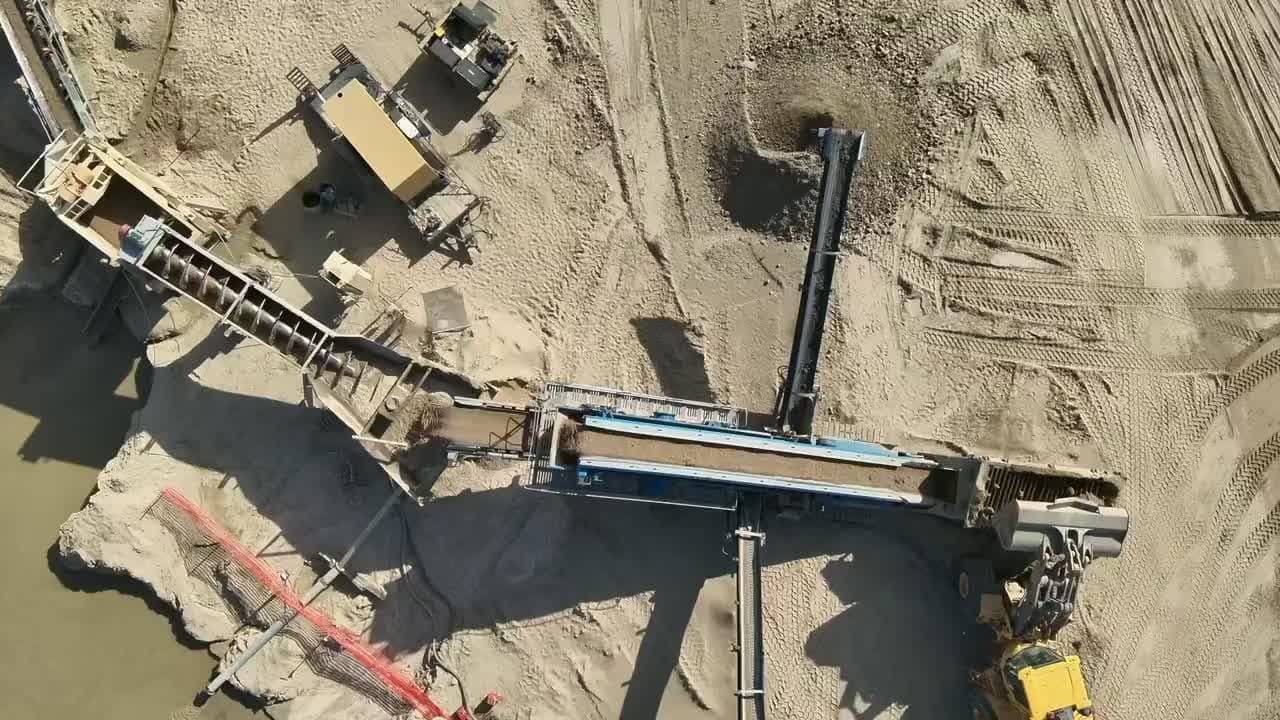
Screening removes oversize and separates coarse fractions. Washing removes dirt, silt, clay, and excess fine material. A fine material screw washer can wash, classify, and dewater sand. Classifying tanks separate sand by settling behavior and can re-blend fractions into concrete sand, asphalt sand, mason sand, or other target products. Hydrocyclones can remove fines or recover useful sand from slurry. Dewatering screens reduce moisture so the sand can be stockpiled and loaded.
The reason for all this equipment is consistency. A raw sand deposit can vary. A crushed screenings pile can contain too many fines. A classifying system lets the producer make a more controlled product.
How A Classifying Tank Makes Different Sands
A classifying tank uses water and settling rates. Coarser sand grains settle earlier. Finer grains travel farther before they settle. Valves at different stations discharge different fractions, and the plant can recombine those fractions into one or more products.
That is how one feed can support multiple sands. A plant might produce a concrete sand, a masonry sand, and a finer product from the same general source by controlling classification and blending. If the feed changes, the controls and recipes may need adjustment.
This is also why sand products are not always interchangeable even when they come from the same plant. They may be different recipes from the same raw material.
Moisture In Sand Loads
Sand holds water differently than coarse stone. Wet sand can weigh more per cubic yard, flow differently from a truck, bridge in bins, and change batching behavior.
For concrete and mortar production, moisture matters because water already in the sand contributes to the total water in the mix. If a batch plant or crew does not account for that moisture, the mix can change. For fill and bedding, moisture affects compaction and workability. For delivery, it can affect appearance and how the pile drains after dumping.
When comparing sand quantities, remember that bulk sand is sold by weight, but field placement is usually thought about in volume and depth. Moisture, density, and compaction make those conversions approximate.
Masonry Sand: What To Watch
For masonry work, watch for:
- Gradation that is appropriate for mortar.
- Cleanliness and low deleterious material.
- Consistent source.
- Moisture consistency when batching.
- Workability for the mason.
- Project specification requirements.
Do not assume play sand, fill sand, or any fine-looking local sand is appropriate for mortar. The wrong sand can change water demand, finish, bond, and consistency.
Concrete Sand: What To Watch
For concrete, watch for:
- Approved source if required.
- Gradation that fits the mix design.
- Controlled amount passing No. 200.
- Absence of harmful organic impurities, clay lumps, coatings, and deleterious material.
- Consistent moisture and absorption behavior.
- Compatibility with coarse aggregate and cementitious materials.
Concrete sand is part of a mix design. Substituting another sand can change slump, water demand, finishability, strength, and yield.
Fill Sand: What To Watch
For fill sand, the main questions are usually placement, compaction, drainage, and contaminant tolerance.
Some fill sands place easily and drain well. Others contain enough fines to compact more tightly. Some may be too silty for drainage. Some may be unsuitable where clean bedding is required.
Before ordering fill sand, describe the use. A trench, a building pad, a landscape leveling area, and a pipe bedding detail may all need different material.
Fill Sand And Compaction
Fill sand can be easy to place, but that does not mean it automatically becomes a stable structural layer.
Clean, uniform sand can drain well but may shift or erode if it is not confined. Sand with more fines may compact more tightly, but it may drain less freely and can become moisture sensitive if the fines are silty or clayey. Loose sand can settle after placement, especially if it is placed too thick, flooded, vibrated, or loaded before it is compacted.
For trenches and utility work, the project detail should control whether sand is allowed, what gradation is required, and how it should be compacted. For general site fill, the main questions are whether the material will support load, whether it will drain, and whether it is compatible with the surrounding soil.
Do not assume fill sand is acceptable under slabs, pavements, or structural features unless the design allows it.
Sand For Bedding And Pavers
Bedding sand is a special case because the sand supports another system, such as pavers, pipe, or slabs.
For pavers, the sand must be compatible with the paver system and jointing material. Too fine, too rounded, too dirty, or too unstable a sand can affect settlement and performance. For pipe bedding, the specification may require a clean, controlled sand or fine aggregate that protects the pipe and drains or compacts as intended.
Always follow the project detail or manufacturer guidance.
Bunker Sand And Specialty Sands
Golf bunker sand, equestrian footing sand, filtration sand, and other specialty sands show why "sand" is too broad a label.
Bunker sand is judged by particle size distribution, drainage, firmness, crusting tendency, contamination, color, and playability. Equestrian sand must balance cushion, stability, dust, moisture, and hoof safety. Filter sand must meet specific gradation and cleanliness requirements so water moves through it predictably.
These sands are not chosen the same way as fill sand. A local product that works for trench backfill may be completely wrong for a bunker or arena. Specialty sands need job-specific testing and field expectations, not just a generic size name.
Asphalt Sand And Fine Aggregate
Asphalt mixes may use natural sand, manufactured sand, screenings, or blended fine aggregate. The sand fraction affects voids, binder demand, texture, and workability in the plant and during placement.
Manufactured sand can be useful in asphalt because angular fine aggregate can contribute to the aggregate skeleton. But excess dust, poor gradation, or harmful fines can create problems. Some specifications also distinguish between natural sand and manufactured sand or limit certain materials.
For customers, the important point is that asphalt sand is not automatically the same as masonry sand, concrete sand, or fill sand. It is selected as part of a job mix formula and should follow the approved mix design.
Sand For Drainage
Sand can drain, but not all sand is a good drainage material.
Fine sand can hold water by capillary action and may clog more easily. Sand with silt or clay can lose permeability. Drainage systems also need to prevent adjacent soil fines from migrating into the drain, which may require a graded filter or geotextile.
If the job is a drain, describe the soil, pipe, fabric, slope, and outlet. Do not assume any sand will function as a drainage layer.
Ordering Sand By The Job
When requesting sand pricing, include:
- Use: masonry, concrete, pavers, bedding, fill, backfill, drainage, asphalt, or landscaping.
- Whether there is a written specification.
- Required quantity and delivery address.
- Whether the material must be washed or classified.
- Whether source approval is required.
- Whether moisture matters for batching.
- Access constraints for delivery.
If you only say "sand," the supplier has to guess. If you describe the application, the right category becomes much clearer.
What A Sand Gradation Report Tells You
A sand gradation report lists the percent passing or retained on standard sieves. For fine aggregate, common sieves may include the No. 4, No. 8, No. 16, No. 30, No. 50, No. 100, and No. 200.
The upper sieves show whether the sand contains too much coarse material or oversize. The middle sieves describe whether the sand is coarse, medium, or fine overall. The No. 100 and No. 200 tell you about the fine end. A fineness modulus may also be reported as a single index of overall coarseness, though it does not replace the full curve.
For the blend calculator and similar tools, the full gradation is more useful than a name. A masonry sand, concrete sand, and manufactured sand may all mostly pass the No. 4 sieve, but their curves can be very different.
Questions To Ask Before Substituting Sand
Before substituting one sand for another, ask:
- Does the project have a specification?
- Is the sand used in concrete, mortar, asphalt, bedding, drainage, fill, or specialty work?
- Is the sand natural, manufactured, or blended?
- Is it washed and classified?
- What is the percent passing the No. 200 sieve?
- Does the sand contain clay, organics, or soft particles?
- Does the mix design or installer depend on a particular gradation?
- Will moisture affect batching or placement?
If the job is structural, bonded, or inspected, do not substitute based on appearance alone.
Why Local Sand Names Can Be Misleading
Local names are useful, but they can hide important differences.
"Concrete sand" in one market may be a natural river sand. In another, it may include manufactured sand. "Mason sand" may be washed and classified at one plant and simply screened at another. "Fill sand" may be clean and free draining in one area and silty in another. "Screenings" may be usable manufactured sand in one process and too dusty for another.
When performance matters, ask what the material actually is: natural or manufactured, washed or unwashed, classified or simply screened, fine or coarse, clean or silty, approved or unapproved. The local nickname should lead to the data, not replace it.
Common Mistakes
Common sand mistakes include:
- Using fill sand for concrete.
- Using concrete sand where a finer masonry sand is needed.
- Using fine silty sand for drainage.
- Ignoring No. 200 fines.
- Assuming washed sand and unwashed sand are interchangeable.
- Substituting manufactured sand without checking gradation and workability.
- Ordering by local nickname without confirming the application.
Sand problems can be expensive because they often show up after placement, mixing, or finishing.
Bulk Delivery Notes
For bulk delivery:
- Minimum order is 12 tons per product.
- One product ships per truckload.
- Different sand types require separate loads.
- Delivered price depends on source distance, product availability, and quantity.
- Moisture can affect handling and apparent volume.
Large commercial jobs may qualify for project pricing.
The Bottom Line
Masonry sand, concrete sand, fill sand, and manufactured sand are different because they are made for different jobs.
Masonry sand prioritizes workability and finish. Concrete sand must fit a mix design and quality requirement. Fill sand is used for volume, backfill, and leveling where the specification allows. Manufactured sand can be a strong product when crushed, washed, classified, and blended correctly.
Do not order sand by name alone when performance matters. Ask about gradation, cleanliness, source, and specification.