
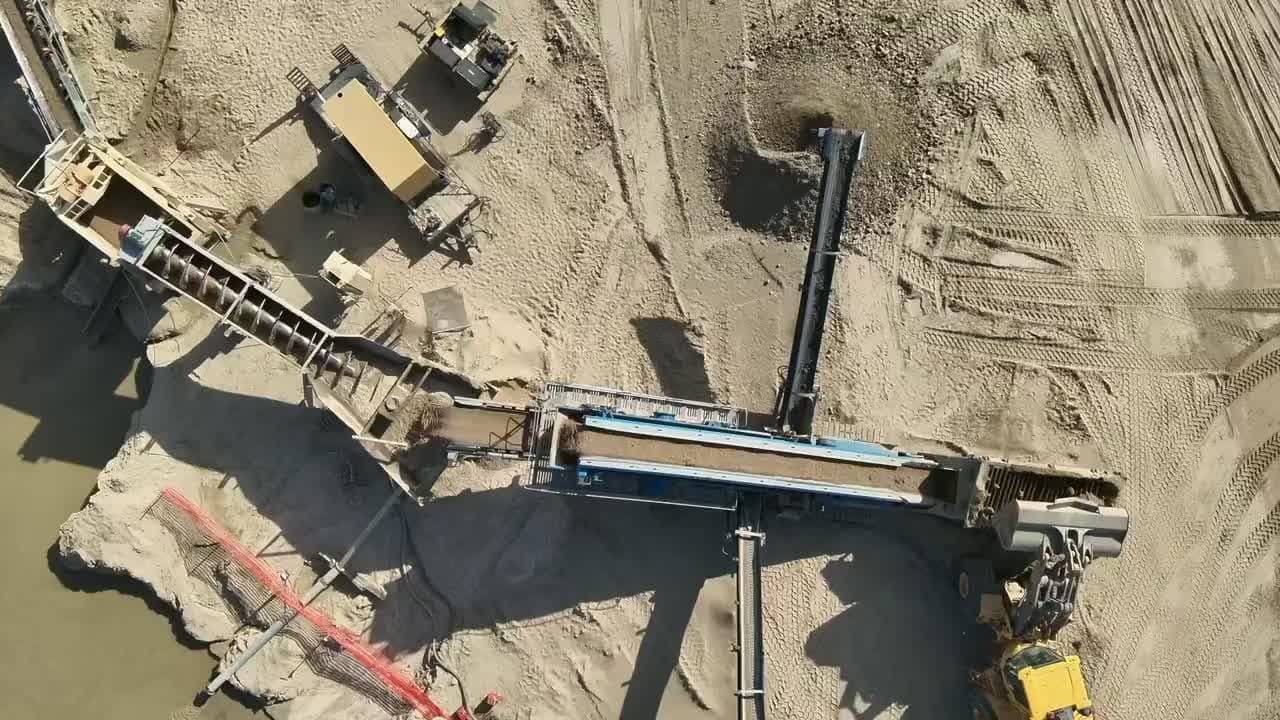
In a crushed stone quarry, aggregate production starts before the crusher.
It starts at the face, where rock is drilled and blasted so it can be loaded, hauled, crushed, screened, washed, blended, and sold. A blast is not just a way to break rock loose. It is the first major size-reduction step in the process.
If blasting creates the right fragmentation, the plant runs more smoothly. The loader digs efficiently. Trucks carry consistent loads. The primary crusher receives manageable feed. Screens and secondary crushers operate closer to target. Product quality is easier to control.
If blasting is poor, the problems travel downstream: oversize boulders, uneven feed, higher crusher wear, lower throughput, excess fines, more secondary breaking, more downtime, more dust, and more variability.
This guide explains the connection between quarry blasting and aggregate quality at a high level. It is not a blasting manual. Blasting must be designed and performed by qualified professionals under applicable laws, permits, and safety procedures.
Blasting Is Part Of The Whole Process
Many people think of quarry production as a plant problem: crushers, screens, conveyors, wash plants, and loaders. Those machines matter, but they do not operate in isolation.
The quarry face determines the feed. The feed determines how the primary crusher performs. The primary product affects the secondary and tertiary stages. The screens determine which sizes become saleable products and which sizes return for more crushing.
Blasting sits at the front of that chain.
A well-designed blast aims to produce rock fragments that can be safely loaded and efficiently processed. It should also protect workers, neighbors, equipment, highwalls, benches, and the environment.
The Main Goal: Controlled Fragmentation
Fragmentation means the size distribution of broken rock after the blast.
The plant does not want a pile made entirely of dust, and it does not want a pile full of boulders too large for the primary crusher. It wants a controlled range of rock sizes that match the loading equipment, haulage equipment, crusher opening, and desired production rate.
Good fragmentation can:
- Reduce secondary breaking.
- Improve loader productivity.
- Increase crusher throughput.
- Reduce crusher blockages.
- Lower wear from shock loading.
- Improve energy efficiency.
- Stabilize downstream screening.
- Help maintain product gradation.
Poor fragmentation can make every downstream step more expensive.
Oversize Rock
Oversize is rock that is too large for the next step in the process.
If boulders are too large for the primary crusher, they may need to be broken with a hydraulic hammer or another approved method before processing. That adds time, equipment cost, noise, safety exposure, and delays.
Oversize can also bridge in hoppers or feeders. A bridged hopper blocks flow and can create dangerous conditions. Even when the oversize eventually passes, it may shock-load the crusher and reduce production.
A blast that leaves too much oversize is often expensive even if the shot itself looked successful.
Excess Fines
The opposite problem is excess fines.
Fines are small particles generated during blasting, crushing, screening, handling, or degradation. Some fines are useful in dense base. Too many fines can overload screens, create dust, reduce drainage in clean products, increase wash-plant load, and create product-balance issues.
A blast that pulverizes too much rock can create fine material before the plant has a chance to control it. Those fines may bypass crushers, blind screens, or build up as low-value screenings.
The right blast does not simply maximize breakage. It creates the fragmentation the plant can use.
Uniform Feed Helps Crushers
Crushers perform best with steady, controlled feed.
If the blasted muck pile alternates between fines and huge boulders, the primary crusher feed becomes inconsistent. The operator may have to slow the plant, clear blockages, or handle oversize separately. Downstream crushers and screens see the same instability.
Uniform feed helps maintain:
- Throughput.
- Crusher chamber loading.
- Product size.
- Power draw.
- Wear pattern.
- Screen loading.
- Recirculating load.
The blast is one of the first opportunities to improve feed consistency.
Geology Controls How Rock Breaks
Rock does not break the same way everywhere.
The blast design must account for rock type, bedding, joints, fractures, faults, weathering, moisture, compressive strength, abrasiveness, and bench geometry. Limestone may behave differently from granite, basalt, sandstone, or dolomite. Even within one quarry, ledges can change.
Natural fractures can help break the rock, but they can also create uneven burden or unexpected movement. Weak seams can generate fines or unstable faces. Massive rock may need different energy distribution than highly jointed rock.
Good blasting begins with geology.
Bench Design
Quarry benches are the working levels cut into the rock. Bench height, face angle, catch benches, access, and drill patterns all affect blast performance and safety.
A bench must be designed so drilling equipment can work safely, the blast can be loaded correctly, and the broken rock can be excavated efficiently. Highwall stability and final wall control also matter.
Poor bench conditions can create uneven holes, inconsistent burden, backbreak, toes, or unstable rock. Those issues affect both safety and production.
Drilling Accuracy
Blasting depends on drilling accuracy.
The blast design assumes holes are in the right place, drilled to the right depth, and oriented correctly. If holes wander, are short, are overloaded, or encounter unexpected voids or seams, the energy distribution changes.
Bad drilling can cause:
- Oversize.
- Excess fines.
- High toes at the floor.
- Backbreak behind the row.
- Uneven muck pile shape.
- Flyrock risk.
- Poor highwall control.
Modern operations may use GPS, drill monitoring, face profiling, and boretracking to improve accuracy. Even with technology, field discipline matters.
Burden, Spacing, And Timing
In simple terms, burden is the distance between a blast hole and the free face. Spacing is the distance between holes. Timing controls the sequence of energy release.
These variables influence how the rock moves and breaks. Too much burden can leave oversize or toes because the rock is not relieved effectively. Too little burden can increase flyrock risk or create excessive fines. Poor spacing can create uneven fragmentation. Poor timing can reduce movement control and increase vibration or air overpressure.
This article will not give design formulas because blasting is specialized and safety-critical. The practical point is that these variables are engineered, measured, and adjusted based on results.
The Muck Pile Matters
The muck pile is the pile of blasted rock.
Its shape affects loading. A well-thrown pile can be easier and safer for loaders or excavators to dig. A tight or poorly fragmented pile may slow loading, increase bucket wear, and create unstable digging conditions. A pile with boulders hidden in fines can surprise operators and disrupt the primary crusher.
The goal is not just broken rock. It is broken rock arranged so the loading and hauling process works.
Secondary Breaking
Secondary breaking is the extra work needed to reduce oversize after the blast. It may involve a hydraulic hammer or other approved equipment.
Every hour spent breaking oversize is an hour not spent moving regular production efficiently. It can also increase noise, dust, equipment wear, and safety exposure near large broken rock.
Reducing secondary breaking is one of the clearest benefits of good blast design.
Crusher Throughput
The primary crusher has a feed opening, chamber geometry, power limit, and capacity range. It can only accept and process material within practical limits.
Good fragmentation helps the crusher stay in its productive range. Oversize can stall or bridge. Too much fine material can reduce effective capacity and waste energy. Inconsistent feed can change power draw and product size.
Because crushers and screens are expensive to own and operate, improving blast fragmentation can reduce cost per ton even if the blast itself requires more planning.
Product Shape And Quality
Blasting influences product quality indirectly.
The final particle shape is mostly controlled by crushing stages, crusher type, screen setup, and handling. But blasting affects the feed that enters those machines. If the blast creates inconsistent feed, the plant may need to adjust crusher settings, recirculate more material, or accept more variability.
Rock damage can also matter. Excessive blast energy may create microcracks or generate weak fragments in some conditions. Poor fragmentation may force more aggressive crushing later, creating additional fines. The relationship is site-specific, but the chain is real: blast quality affects plant stability, and plant stability affects product consistency.
Mine-To-Mill Thinking
Aggregate producers often use a mine-to-mill mindset: optimize the whole production chain, not one step in isolation.
A cheaper blast is not always cheaper if it creates oversize, slows the loader, blocks the primary crusher, increases secondary breaking, and lowers plant throughput. A more carefully engineered blast may cost more at the bench but reduce total cost per ton by improving digging, hauling, crushing, screening, and product yield.
The right comparison is not pounds of explosive alone. It is total cost and product quality from the face to the stockpile. That includes drill cost, blast cost, loader productivity, truck cycle time, crusher throughput, screen efficiency, recirculating load, wear, downtime, and saleable product tons.
This is why blasting decisions should be tied to plant data. The best blast is the one that supports the products the quarry needs to make.
The Goal Is Fit-For-Purpose Fragmentation
"Smaller rock" is not always the goal.
For some base-course operations, creating more smaller material before the primary crusher can improve throughput and reduce later crushing. For a clean stone or asphalt aggregate operation, too many fines may reduce yield. For riprap or armor stone, the quarry may intentionally want larger intact pieces. For a source with contaminating seams, blast movement may need to help separate materials instead of mixing everything together.
The target fragmentation depends on the source, plant, and product mix. A good blast starts with the end product in mind, not with a generic desire to break everything as small as possible.
Powder Factor Is Not The Whole Answer
Powder factor describes explosive quantity relative to rock volume or tonnage. It is useful for tracking cost and comparing shots, but it is not the same as blast quality.
A blast with a higher powder factor can still perform poorly if the holes are drilled inaccurately, the burden is wrong, the timing is poor, or the geology is misunderstood. A blast with a lower powder factor can perform well if the design distributes energy correctly and matches the rock structure.
For aggregate production, better questions are:
- Did the shot produce the right fragmentation?
- Did it reduce oversize and secondary breaking?
- Did the loader fill buckets efficiently?
- Did crusher throughput improve?
- Did product yield improve?
- Were vibration, air overpressure, and safety controls acceptable?
Powder factor is one number. Performance is the full result.
Fines Balance And Manufactured Sand
Fines are not always waste. Screenings and manufactured sand can be valuable if processed correctly. Wash plants, classifying tanks, hydrocyclones, and blending systems can turn some fine material into saleable sand or base.
But fines must match market demand. If a quarry creates more fines than it can sell or process, those fines become stockpiles. If the market needs clean stone and the process creates too much dust, washing and screening costs rise.
Blasting affects this balance by influencing how much fine material enters the plant before crushing even starts.
Recirculating Load And Screen Efficiency
Poor blasting can increase the amount of material that has to be crushed again.
If the primary crusher sends too much oversize or poorly sized material downstream, secondary and tertiary crushers may see higher recirculating loads. Screens may become overloaded. More material travels around the plant without becoming a finished product. That adds wear, power use, and bottlenecks.
On the other side, too many fines can blind screens, reduce capacity, or overload wash circuits. The plant may spend energy handling material that is not part of the target product.
Consistent blast fragmentation helps screens and crushers operate closer to their intended balance. That is one of the clearest links between drilling/blasting and final aggregate gradation.
Blasting And Product Yield
Yield means how much of the processed rock becomes saleable product in the sizes the market wants.
Two blasts can produce the same total tons but different saleable yield. One may create the right feed for a high-demand clean stone. Another may create too much oversize and too much fine material, leaving less of the desired intermediate sizes. The plant can adjust crusher settings and screen decks, but it cannot completely undo the initial fragmentation.
Yield is especially important when a quarry has strong demand for specific sizes. If the market needs 3/8-inch chips, concrete stone, or base, the blast and plant should work together to maximize those products without creating unsold surplus.
Blasting Around Variable Ledges
Many quarries do not have one uniform rock mass.
A limestone quarry may include harder and softer ledges, shale seams, chert, clay-filled joints, weathered cap rock, voids, or bedding planes. A granite or basalt quarry may include weathered zones, columns, fractures, or intrusions. A sandstone source may have bedding and strength changes.
If these features are ignored, the shot may mix unwanted material into the product stream or create uneven fragmentation. If they are understood, the blast can be designed to manage them. In some cases, material can be separated, mined selectively, blended, or routed to products where it is appropriate.
This is another reason geology and blasting cannot be separated.
Safety Comes First
Blasting is heavily regulated because the risks are serious.
Important safety concerns include explosive storage and handling, site security, blast area control, flyrock, misfires, lightning, fumes, drill hazards, communication, exclusion zones, and post-blast inspection. Only trained and authorized personnel should design, load, and fire blasts.
For customers and neighbors, the takeaway is that a professional quarry blast is not improvised. It is planned, documented, controlled, and reviewed.
QA/QC Before The Blast
Blast quality depends on field execution.
The design may assume a certain hole depth, location, diameter, burden, spacing, stemming height, deck arrangement, explosive loading, and timing. If the drilled holes do not match the plan, the energy distribution changes. If connections are missed or timing is wrong, safety and performance can suffer.
Quality control before firing can include checking hole depths, reviewing face conditions, confirming loading records, verifying stemming, checking initiation connections, clearing the blast area, and confirming communication. These steps are not paperwork for its own sake. They protect people and make the blast more predictable.
Because blasting is irreversible, errors caught before firing are far cheaper and safer than problems discovered afterward.
Vibration And Air Overpressure
Quarry blasts can create ground vibration and air overpressure. These are monitored and managed through blast design, timing, charge control, stemming, geology awareness, and operating permits.
Neighbors may feel vibration or hear airblast even when levels are within regulatory limits. Good operators manage this through monitoring, communication, blast records, and continuous improvement.
From an aggregate-quality perspective, vibration and overpressure are also signs that energy is moving through the system. The goal is to use energy to break and move the rock efficiently while minimizing unwanted effects.
Community Consistency Matters
Neighbors often respond not only to magnitude but to surprise. A quarry that blasts at predictable times, monitors results, communicates clearly, and avoids unusual events is easier to live near than an operation with inconsistent blasts.
From the operator's perspective, consistency also supports production. If vibration spikes, flyrock risk, or airblast complaints indicate poor control, the same inconsistency may be affecting fragmentation and muckpile behavior.
Good blasting programs therefore serve both production and community relations. Stable design, careful execution, and measurement reduce surprises.
Flyrock
Flyrock is rock thrown beyond the intended blast area. It is one of the most serious blasting hazards.
Flyrock prevention depends on proper blast design, drilling accuracy, burden control, stemming, loading practices, geology review, site security, and blast-area clearing. Because flyrock risk is safety-critical, it is managed conservatively by qualified blasting professionals.
This is one reason quarry blasting is not simply about breaking rock faster. The blast must be safe first.
Dust And Fumes
Blasting and downstream processing can create dust. Dust control may involve water, timing, blast design, road controls, plant enclosures, sprays, and housekeeping.
Blasts can also create fumes under certain conditions. Post-blast inspection and site controls help manage exposure.
Dust and fines are linked but not identical. A blast can create fine rock particles that become dust during loading, hauling, crushing, or screening. Managing the blast helps manage the entire material flow.
Modern Blast Technology
Modern quarries may use tools that improve blasting precision:
- Drone surveys.
- Face profiling.
- 3D bench models.
- GPS-guided drilling.
- Boretracking.
- Electronic initiation systems.
- Blast simulation.
- Fragmentation analysis.
- Crusher and screen performance feedback.
The most valuable use of technology is feedback. If the plant sees more oversize, more fines, or lower throughput after a blast, the blast design can be reviewed and adjusted. If fragmentation improves production, the design can be repeated or refined.
Fragmentation Measurement
Historically, blast fragmentation was often judged visually: how the muckpile looked, how the loader dug, and how much oversize needed breaking. Those observations still matter, but they can be supported with measurement.
Drone imagery, camera systems, conveyor-belt image analysis, and crusher-feed monitoring can estimate size distribution. Loader productivity, hammer hours, crusher blockages, and plant throughput provide practical confirmation. None of these measures is perfect alone, but together they show whether the blast is helping or hurting the operation.
The strongest programs connect blast records to downstream results. If one pattern consistently improves throughput while another produces more oversize, the data should shape future designs.
Measurement And Continuous Improvement
Good blasting is measured by results, not only by whether the shot fired.
Useful measures include:
- Oversize count.
- Secondary breaking time.
- Loader productivity.
- Truck cycle time.
- Primary crusher throughput.
- Crusher power draw.
- Blockage events.
- Screen loading.
- Product gradation.
- Fines generation.
- Vibration and air overpressure records.
- Highwall and bench condition.
The best operations connect drilling and blasting data to plant data.
What Customers Should And Should Not Take From This
Customers do not need to specify blast designs. That is specialized, regulated work.
What customers should understand is that aggregate quality is built upstream. A consistent load of base rock, clean stone, or manufactured sand depends on far more than the final screen deck. It depends on geology, drilling, blasting, loading, crushing, screening, washing, stockpiling, and loadout.
If a supplier invests in process control, that can show up as more reliable gradation, better availability, and fewer surprises. If a source has poor control at the face, downstream equipment may spend the rest of the day trying to compensate.
Common Symptoms Of A Poor Blast
The signs of a poor blast usually show up in production before they show up in a customer conversation.
Common symptoms include:
- Too much oversize at the face.
- More hydraulic hammer time than expected.
- Loader buckets that are hard to fill.
- Slow truck loading.
- Bridging in hoppers or feeders.
- Crusher stalls or blockages.
- Unstable crusher power draw.
- Higher recirculating load.
- Screens overloaded with fines.
- Product gradation drifting.
- Excess dust during loading and processing.
- Uneven floor conditions or toes left at the bench.
One symptom by itself may have several causes. A pattern across the face, loader, crusher, and screens points back to fragmentation and muckpile behavior. Good operations review those symptoms after each shot and adjust the next one.
Toes, Backbreak, And Highwall Control
Two common blast-quality problems are toes and backbreak.
A toe is unbroken rock left at the floor of the bench. It can make loading difficult, create uneven working surfaces, and require secondary breaking. Toes may result from poor energy distribution, inaccurate drilling, excessive burden near the floor, weak confinement, or geology that was not accounted for.
Backbreak is unwanted fracturing behind the last row of holes. It can damage the remaining highwall or bench, create loose rock hazards, and reduce control of future shots. Backbreak can also create extra material outside the intended blast area.
Both problems matter for aggregate quality because they affect safety, loading, fragmentation, and the consistency of feed to the plant.
Water In Blast Holes
Water in blast holes can affect product choice, loading practice, and performance. Some explosives are designed for wet holes; others are not. Water can also indicate fractures, seams, or groundwater conditions that influence how energy moves through the rock.
From a high-level production standpoint, wet holes add variability that must be managed by qualified blasting professionals. If water causes poor loading, product loss, or inconsistent energy distribution, the resulting fragmentation may suffer. That can show up later as oversize, poor floor control, or inconsistent crusher feed.
This is another example of why blasting starts with field conditions, not just a pattern drawn on paper.
What This Means For Customers
Customers usually do not ask about blast design when ordering aggregate. But they feel the results.
Better process control can mean more consistent product, fewer gradation swings, better availability, and more predictable delivered pricing. Poor upstream control can show up as inconsistent base, dirty clean stone, too much oversize, too many fines, or inventory shortages.
Aggregate quality is built through the whole chain: geology, blasting, loading, hauling, crushing, screening, washing, stockpiling, and loadout.
The Bottom Line
Blasting affects aggregate quality because it controls the first stage of rock breakage.
A good quarry blast produces controlled fragmentation, reduces oversize, avoids unnecessary fines, supports safe loading, feeds the primary crusher consistently, and helps the plant make reliable products. A poor blast creates costs that show up everywhere downstream.
The blast is not separate from the aggregate. It is part of how the aggregate is made.